Mapping Your Nervous System
A Polyvagal Theory Approach to Nervous System Regulation.
with Laura Bertrand, MA, LPC
Friday, November 13, 2026 · 9:00 AM to 1:10 PM Eastern · Zoom
Mapping Your Nervous System has been approved by NBCC for NBCC credit. Well Being Sanctuary Institute, LLC is solely responsible for all aspects of the program. NBCC Approval No. SP-5470.
Leave with a map of your own nervous system, finished.
You cannot regulate what you cannot name. Most of us identify with our reactions as if they were part of our personality, when they are part of our physiology. This four hour experiential training, grounded in polyvagal theory, pays attention to the behaviors, emotions, and sensations involved in your autonomic nervous system responses. Once you can name the state you are in, you can work with your nervous system, rather than be reactive towards it.
You build the map first, on paper and in your own words, across three states: connected (ventral vagal), activated (sympathetic), and energy conservation mode (dorsal vagal). For each state you write down your own behaviors, emotions, and sensations, and the baseline builders that bring you back to baseline. The morning then turns to a graph of your own pattern drawn from your map, how polyvagal theory explains each state, and your own baseline objectives. A body map at the start, read again at the end, shows the state you arrived in.
It is an experiential training that focuses on practical applications of nervous system states and how they are unique to each person.
Polyvagal theory is the work of Stephen Porges. The mapping draws on the polyvagal ladder of Deb Dana, LCSW, the tool Laura learned this work from, and she credits Dana by name in the session.
For you, and for your clients
If you can learn it on yourself, you can teach it to clients. The first half of the morning is about you: your own states, what moves you between them, and how you switch gears. The second half turns the same map toward your work, so you leave knowing how to teach your clients to regulate their own autonomic nervous system.
Laura calls it heavy learning. It is very logical and very cognitive, and she keeps it simplified and practical. You fill in every page yourself, because it is way more beneficial when you do all your own work. Come with a quiet room and a clear morning.
By the end of the training, you will be able to
- Identify and describe the three autonomic states (ventral vagal, sympathetic, and dorsal vagal) and explain the evolutionary/historical purpose of each.
- Explain the concept of neuroception and describe how the autonomic nervous system detects cues of safety and danger below the level of conscious awareness.
- Identify personal examples of emotions, triggers, and glimmers associated with each of their three autonomic states.
- Construct a complete, personalized Autonomic Profile using the polyvagal ladder, mapping body sensations, thoughts, emotions, and behaviors for each state.
- Compare pre- and post-training nervous system state awareness using a personal body-mapping exercise.
- Identify at least one clinical scenario in which autonomic state awareness informs case conceptualization or the therapeutic relationship.
- Develop a personal regulation-capacity plan, including individualized baseline objectives, to strengthen flexible movement toward the ventral vagal state.
In Laura's words: "Two terms in the objectives are Deb Dana's. In the training, the Autonomic Profile is your nervous system map, and what she calls glimmers, I call baseline builders."
Agenda
Welcome and orientation
Zoom basics, Laura's introduction, and yours. Everybody is coming from some place, and the morning starts from there.
Somatic check-in
Where are you in your nervous system right now? You color a body map with what you notice. Then one clinical scenario from the room, with no identifying details, in four steps: read the client's state, think through the case, ask whether this client could do map work now or needs it scaffolded, and ask what state you need to be in to offer them something to borrow.
Building your nervous system map
Built top down: connected, then activated, then energy conservation mode. Each state has three rungs, from its first small sign to its peak, with an example of what you do and an emotion word for each. Each state gets its own Buzzwords: your go-to language, what you tell yourself, and the body sensations you know it by. In the connected state you name your baseline builders, the things that bring you back to baseline.
Break
Sharing your map, and the graph
One volunteer walks the group through their map, to see if it fits the model. Then the graph: a flat line for your baseline, three hits above it, and the drop below it into energy conservation mode. The goal is a small squiggle rather than big highs and lows. Then you plot your own.
Nervous system education and regulation capacity
How the nervous system works: the three states, neuroception, and how polyvagal theory proposes the states evolved. Then the way back to baseline, which Laura calls remembering. Last, the wellness wheel: your shortest spokes become one or two baseline objectives.
Reading your body map
Go back to your body map from 9:20 and read it as a nervous system state.
Closing reflection
What was most helpful today, around the room.
Four hours and ten minutes of event time. The break is not credited. 4.0 credit hours.
Licensed mental health professionals: counselors, therapists, and related clinicians, looking for a clinically grounded, self-experiential approach to nervous system regulation for personal and clinical use. Pre-licensed clinicians working under supervision are welcome.
Registration asks for your name, the email your certificate should go to, and your license type, number, and issuing state. 4.0 credit hours; check with your board.
Two sheets of white paper, markers, and pens. The handouts (body map, Emotion Chart, and wellness wheel) are emailed before the session; print them. The morning is interactive, so a quiet room and a camera you can leave on will help.
Technology. A computer or tablet with a camera, a microphone, and sound, a steady internet connection, and Zoom. The Zoom link comes by email after you register.
Full attendance earns the full 4.0 hours, and Zoom's log of when you join and leave is the record. Partial credit is available in quarter-hour increments for documented late arrival or early departure.
At the close of the session you take a short online post-test of ten questions, linked in the Zoom chat. Your certificate is emailed within 24 to 48 hours of the session, and carries the program title, the date, the hours awarded, and the approval number.
Upcoming dates
- Friday, November 13, 20269:00 AM to 1:10 PM Eastern · Zoom
More dates are coming. To hear when they are set, email contact@wbsinstitute.com. Each date is the same program, with the same objectives, hours, and presenter.
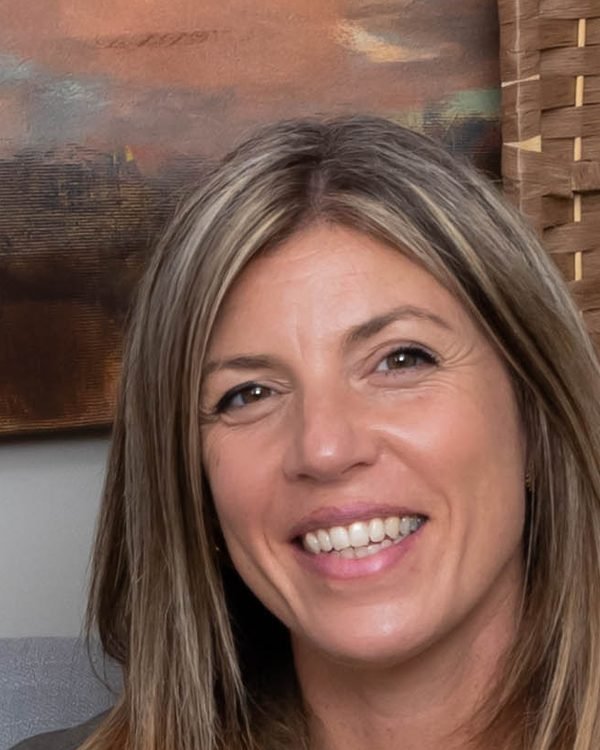
Laura Bertrand, MA, LPC
Licensed Professional Counselor · CT License #005014
Laura Bertrand is a licensed professional counselor specializing in autonomic nervous system regulation, stress physiology, and trauma-informed care. She earned her Bachelor of Science in Psychology from Trinity College in Hartford, Connecticut, and her Master of Arts in Health Psychology from Central Connecticut State University, where her graduate studies focused on the autonomic nervous system, stress reduction, and biofeedback. Her master's thesis examined the mediating role of self-forgiveness in the relationship between mindfulness practice and depressive symptom severity.
Inspired to translate research into direct clinical practice, Laura pursued additional clinical counseling training and licensure. Today she integrates neuroscience, polyvagal theory, and evidence-based therapeutic approaches to help clients develop greater emotional regulation and resilience. In addition to providing psychotherapy, she trains fellow clinicians in nervous system regulation, emphasizing self-awareness and the ability to recognize and map one's own autonomic states. She believes that effective healing begins with understanding the nervous system and cultivating regulation in ourselves, our relationships, and our clinical work.
Laura Bertrand has no financial, contractual, or other formal relationship with Deb Dana, the Polyvagal Institute, or W.W. Norton & Company. Her financial interest in this training is limited to instructor compensation and registration revenue as its creator and sole presenter.
Common questions
How do I earn the full 4.0 hours?
Attend the whole session with your camera on. Zoom's log of when you join and leave is the record. Partial credit is available in quarter-hour increments for documented late arrival or early departure.
Does the post-test decide my certificate?
No. Hours are awarded on attendance. Your certificate is emailed within 24 to 48 hours of the session.
Will my board accept these hours?
4.0 credit hours; check with your board before you register. Everyone is welcome, in Connecticut and outside it.
I have mapped my nervous system states before.
You are welcome. You build a new map on the morning, from scratch and in your own words, because it is way more beneficial when you do all your own work.
Is the session recorded?
Sessions are not recorded.
How do I ask for an accommodation?
Email contact@wbsinstitute.com at least seven days before the session date.
What if I need to cancel?
Cancellations 24 or more hours before the start receive a full refund. If the Institute cancels or reschedules, you receive a full refund or may move to another date at no cost.
Is this therapy?
No. This is professional education, not therapy. Registering does not create a clinical relationship with the presenter or with Well Being Sanctuary.
Reasonable accommodations are available on request, seven days ahead. Cancellations 24 or more hours before the start receive a full refund. Concerns are answered in writing within ten business days. The full wording, with the non-discrimination statement, is on the policies page.
Torrington, CT 06790
Mapping Your Nervous System
with Laura Bertrand, MA, LPC
per seat
- Date
- Friday, November 13, 2026
- Time
- 9:00 AM to 1:10 PM Eastern
- Format
- Live on Zoom
- Credit
- 4.0 credit hours
- Closes
- Thursday, November 12, 10 PM Eastern
Full refund up to 24 hours before the start. Policies
Register and pay
Payment is by card through Stripe, the Institute's secure checkout. You agree to the policies at checkout.
Right after you pay, you land on a short registration form: your name, the email your certificate should go to, and your license details. Your certificate is issued from that form, so please complete it.
Seats are limited. Registration closes Thursday, November 12, 10 PM Eastern.